_edited.jpg)
SEWA by Ela Bhatt: How Unity Transformed India’s Informal Women Workers
- UnscriptedVani

- Aug 22, 2025
- 3 min read
In the history of India's social movements, perhaps nothing is more powerful than the story of SEWA (Self-Employed Women's Association), founded by Ela Bhatt in 1972. From a small effort to organize women working in the informal sector, it has grown, today, to perhaps the largest women's cooperative movement in India, empowering over 2 million members across the country. More than an organization, SEWA is the vision of dignity, self-reliance, and collective strength for women who were once invisible in the economic and social fabric of the nation.
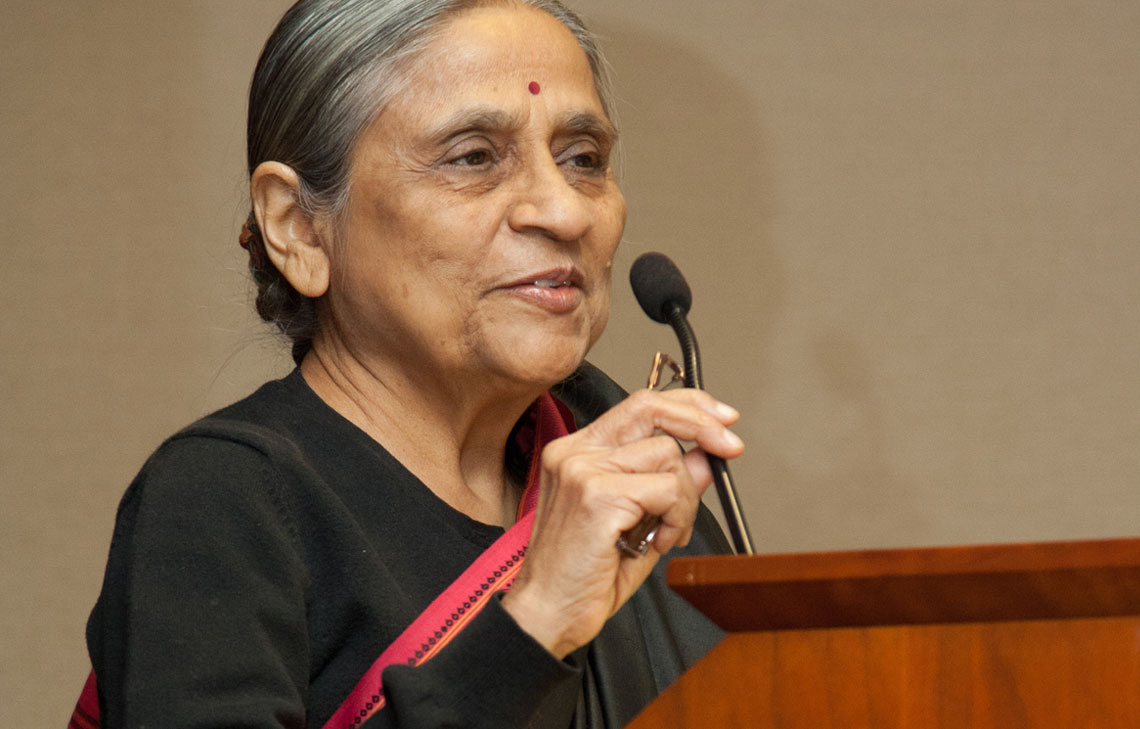
Ela Bhatt was a lawyer and social worker. She recognized that millions of women who stitched clothes, sold vegetables, rolled bidis, or worked as artisans contributed immensely to the economy but were left unprotected, unrecognized, and unpaid. These women lived on the edges, mostly exploited, and denied the access needed in banking and legal systems. The answer Bhatt came up with was simple yet revolutionary: bringing women under the cooperative model where their collective strength could be harnessed to fight for their own rights.
SEWA applied a unique combination of trade unionism and cooperative structure. This was not just about fighting for their rights against exploitation, but also building a sustainable system that would enable women to attain economic independence. Through SEWA, members could negotiate for higher salaries, take out affordable loans, receive treatment through a health scheme, and enjoy skill training. In this respect, the feeling of coming together with a bigger community was a metamorphosis for women who have always struggled in isolation.
Through the years, SEWA has been multi-faceted in the approach toward empowering women. It has created cooperatives in areas from handicrafts and agriculture to services and trades. Setting up the SEWA bank—an institution managed by and for women—allowed them to have access to credit without the terrors associated with traditional banking. SEWA built networks within healthcare, child care, and education while recognizing that economic empowerment will be meaningless without social security. Every one of these initiatives was a practice of self-reliance—aiming to help women gain ownership of their labor, voice, and future.
SEWA's influence has transcended the economic character and has radically changed the perception of society concerning women in the informal sector. Once thought of as disorganized and weak, these women are now seen as capable entrepreneurs, leaders, and agents of change. The lessons from SEWA have proven that when women are empowered to manage their resources and given equal rights and opportunities, they will uplift themselves, their families, and back their communities. With a similar approach and agenda, SEWA has become a global name for grassroots empowerment.
Ela Bhatt's vision continues to be relevant as it counters certain still-prevailing urgent problems—gender inequality, financial exclusion, and lack of social security for informal workers. Today, with women's empowerment being widely discussed in elite spaces, SEWA remains a reminder that real progress must start from below. Its strength lies in inclusivity and in transforming individual battles into collective resilience.
SEWA by Ela Bhatt is not just a cooperative; SEWA is a movement that offers hope, courage, and solidarity. SEWA has shown that systemic change does not always have to come from top-down policies; it can rise from grassroots mobilization and be channeled towards a common cause. For millions of women in India, SEWA is not only a lifeline but also an inheritance that has been passed on with the purpose of a more equal and just society.


Comments