_edited.jpg)
Artificial Intelligence Revolutionizing Industries: A Deep Dive into Its Importance and Significance
- fictiofy
- Dec 11, 2024
- 4 min read
In recent years, Artificial Intelligence (AI) has transcended its role as a futuristic concept and firmly established itself as a transformative force across industries. From automating mundane tasks to enabling ground-breaking innovations, AI’s influence is palpable. But beyond its technological prowess, it’s the human stories and real-world impact that truly capture the imagination. In this article, we’ll take a deep dive into how AI is revolutionizing key industries, its importance, and the profound significance it holds for the future of work, business, and society.
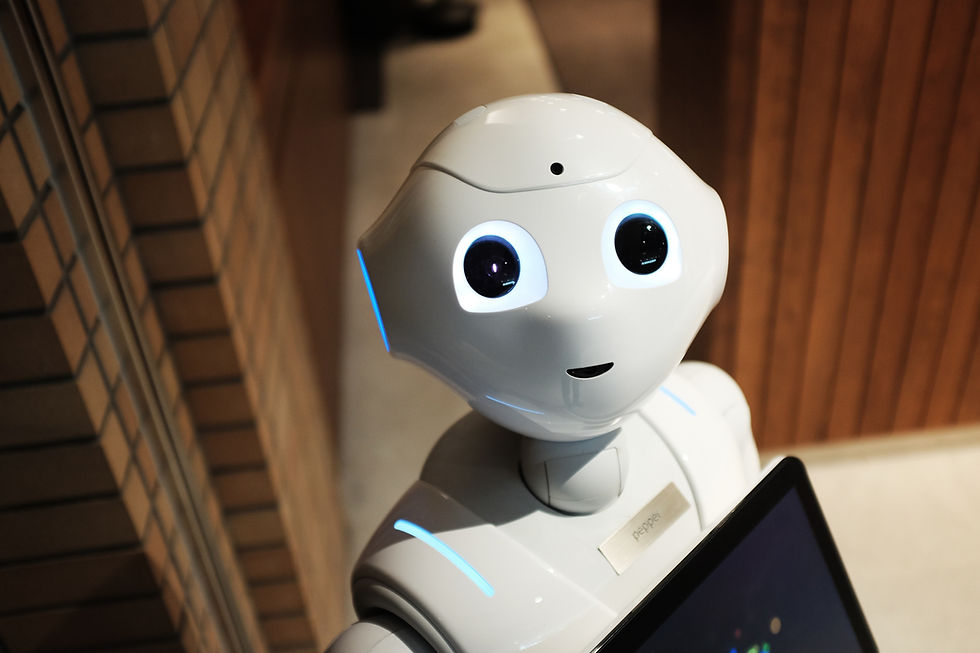
1. AI in Healthcare: From Diagnosis to Compassionate Care
One of the most life-altering applications of AI is in healthcare. Imagine a world where deadly diseases like cancer are detected before symptoms appear. This is not a distant dream but a reality shaped by AI-driven predictive analytics.
Case in Point: Meet Sarah, a 45-year-old woman whose life took an unexpected turn. During a routine health check-up, an AI-powered diagnostic tool identified early signs of breast cancer that traditional methods missed. Thanks to early detection, Sarah underwent timely treatment and now leads a healthy life. This story illustrates how AI doesn’t just save time; it saves lives.
AI’s ability to analyze vast datasets at incredible speed enables personalized treatment plans, drug discovery, and telemedicine solutions. Robots powered by AI are even assisting in complex surgeries, reducing human error. The result? More accurate diagnoses, cost reductions, and accessible healthcare for underserved communities.
2. AI in Finance: The Silent Protector of Wealth
Fraud detection, wealth management, and personalized banking are being revolutionized by AI. Traditional financial institutions have always been vulnerable to fraud, but AI-powered algorithms are acting as sentinels, identifying suspicious activity in real time.
Case in Point: Ramesh, a small business owner, once faced an attempted hack on his bank account. Within seconds, an AI algorithm detected the abnormal login pattern and froze the transaction. A text alert allowed Ramesh to confirm the activity was unauthorized, saving him from financial disaster.
Beyond fraud detection, AI is reshaping how people manage wealth. Robo-advisors analyze market trends and suggest personalized investment strategies, democratizing wealth management for people who can’t afford human financial advisors.
3. AI in Retail: Shopping Gets Smarter
Walk into an Amazon Go store, and you’ll experience the future of retail—no cashiers, no checkout lines, just grab and go. This innovation is powered by AI’s computer vision, sensor fusion, and deep learning technologies.
Case in Point: Ananya, a university student, walked into an AI-driven smart store, picked up snacks, and walked out—no cashier, no card swipe. The store’s AI system tracked her selections in real time and billed her automatically. It was seamless, futuristic, and incredibly convenient.
E-commerce giants like Amazon and Flipkart use AI to provide personalized recommendations, track user behavior, and predict purchasing patterns. By creating a hyper-personalized shopping experience, retailers increase customer satisfaction and boost sales.
4. AI in Manufacturing: The Factory Floor Reinvented
Manufacturing is one of the most visible showcases of AI’s transformative power. Smart factories leverage AI-driven robotics, predictive maintenance, and quality control to increase production efficiency and reduce downtime.
Case in Point: A car manufacturer faced constant production delays due to machine failures. After integrating AI-based predictive maintenance, the company identified potential breakdowns before they occurred, slashing downtime by 40%. Production timelines improved, costs reduced, and customer satisfaction soared.
AI-powered robots are also being used for precision tasks that require high accuracy, such as assembling microchips. These robots not only work faster than humans but also maintain consistency, enhancing production capacity and profitability.
5. AI in Education: The Classroom of the Future
Education has remained relatively unchanged for centuries, but AI is finally challenging the status quo. Personalized learning platforms now adapt lesson plans to individual student needs, making education more engaging and effective.
Case in Point: Priya, a student struggling with math, found hope in an AI-based learning app. The app analyzed her weak areas, provided tailored exercises, and tracked her progress. Priya’s math scores skyrocketed, and her confidence grew.
AI also powers chatbots and virtual tutors, offering 24/7 support to students. Institutions use AI to analyze student performance, predict dropouts, and recommend interventions, ensuring more students stay on track.
6. AI in Entertainment: Lights, Camera, AI!
AI has redefined the entertainment industry, from personalized streaming recommendations to AI-generated scripts and deepfake technology. Streaming platforms like Netflix and Spotify use AI algorithms to curate personalized playlists and recommend shows based on user preferences.
Case in Point: Sanya, a binge-watcher, noticed that every time she opened Netflix, it somehow “knew” what she wanted to watch. That’s AI in action—analyzing viewing habits, predicting preferences, and offering hyper-relevant recommendations.
AI-generated content, such as movie scripts, music, and even entire video games, is on the rise. While critics debate the ethical implications, the potential for creative AI remains immense.
Why Is AI Revolutionizing Industries?
The key to AI’s importance lies in its ability to learn, adapt, and scale—all without human intervention. Here’s why industries are embracing AI:
1. Efficiency and Cost Reduction: AI automates repetitive tasks, allowing humans to focus on higher-value work.
2. Accuracy and Precision: From healthcare diagnoses to manufacturing defects, AI achieves precision no human can match.
3. Personalization: AI understands customer preferences, leading to hyper-personalized experiences in retail, entertainment, and education.
4. Predictive Power: Forecasting future trends and preventing problems before they arise gives businesses a competitive edge.
The Ethical Dilemma: Friend or Foe?
While AI’s potential is immense, ethical concerns loom large. Issues like job displacement, privacy breaches, and algorithmic bias are real. Will AI-powered systems eventually replace human workers? History tells us that every technological revolution, from the steam engine to the internet, has created more jobs than it displaced. The challenge now is ensuring a fair transition for those affected.
Case in Point: During the early 20th century, the advent of automobiles displaced horse-carriage drivers, but it also created millions of jobs in automotive production, maintenance, and fuel services. Similarly, AI may displace roles like data entry but create new roles like AI ethics consultants and machine learning engineers.
Conclusion: The Road Ahead
AI is not just a buzzword; it is a paradigm shift. Its role in industries is growing exponentially, offering opportunities for better healthcare, smarter finance, personalized education, and more. The inspiring human stories behind AI’s impact show that this technology isn’t just about machines—it’s about people. As AI continues to evolve, its ethical development, fair implementation, and human collaboration will determine whether it becomes a force for good or a cause for concern.


Comments