_edited.jpg)
From Banker to Marine Conservationist: Venkatesh Charloo's Mission to Revive Goa's Coral Reefs
- fictiofy
- Jan 4, 2025
- 3 min read
Venkatesh Charloo made a bold career shift, leaving a successful banking job to pursue his passion for marine conservation. As the founder of Coastal Impact, he is dedicated to restoring coral reefs in Goa, and his innovative efforts are helping the state's underwater ecosystems thrive.
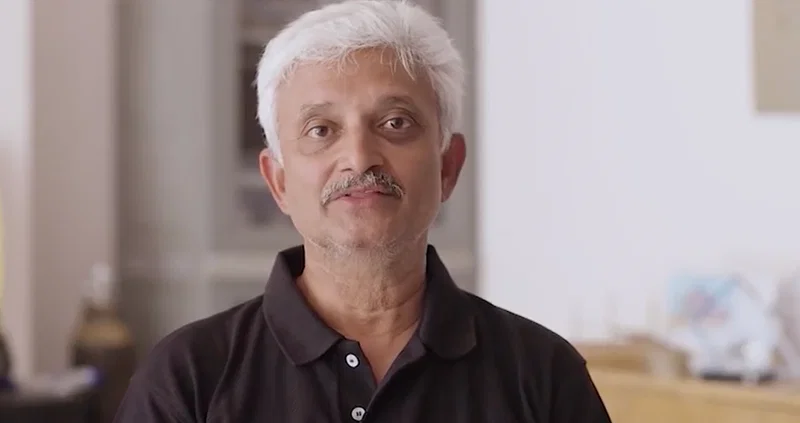
Charloo’s journey into marine conservation began in 2007, when he was diving in Goa and rescued an angelfish entangled in a ghost fishing net. “The fish seemed exhausted, unable to escape the net, so I held it in my arms until it regained strength. To my surprise, it swam back and gently rubbed its head against my hand—almost as if to thank me,” Charloo recalls. That moment profoundly changed his perspective on marine life and deepened his commitment to ocean conservation. He realized that many underwater creatures were suffering due to human activities and that urgent action was needed.
In 1995, Charloo left his banking job in Hong Kong and moved to Goa to work as a scuba diving instructor. Within a few years, he had taken over the Barracuda Diving Centre and began organizing regular underwater and beach clean-ups to combat pollution caused by tourists and local operators. These clean-up efforts were not just about removing trash but also raising awareness about the environmental impact of waste, with the collected materials sent to a recycling plant in Margao.
In 2009, Charloo founded Coastal Impact, a non-governmental organization focused on marine conservation, education, and research. One of its core initiatives is coral transplantation, a critical effort to restore coral cover in Goa’s waters.
Charloo’s interest in coral conservation was driven by the realization that corals are vital for the health of oceans and the environment. With rising ocean temperatures and climate change threatening coral reefs worldwide, Charloo’s efforts aim to reverse some of the damage. “Corals are essential—they protect coastlines from waves and tsunamis, support 25% of marine biodiversity, and contribute up to 70% of the oxygen we breathe,” Charloo explains. However, with coral reefs declining due to warming oceans and acidification, his project became more urgent.
With funding from the Habitats Trust, Charloo launched a coral transplantation project in Goa. Inspired by methods used by Mote Marine Labs in Florida, Charloo's team created metal frames lined with discarded floor tiles. Broken coral fragments were attached to the tiles using super glue and then anchored to the reef. This method has proven successful, with coral growth recorded at nearly 500% in just two years.
However, the project faced challenges when funding dried up during the pandemic. To sustain the initiative, Charloo introduced a unique solution: the adoption of corals. For Rs 5,500 a year, individuals or organizations can "adopt" a coral, with the funds directed towards its ongoing care and maintenance. Currently, 110 of 192 corals have been adopted, showing promising growth. The initiative has also attracted interest from startups, one of which has developed a cement structure for coral transplantation, and another that compresses carbon into floor tiles for use in the reef.
Charloo’s work has garnered international recognition, including being featured in National Geographic's “One for Change” series. Despite facing challenges in securing corporate funding, Charloo remains committed to his mission. He hopes that more companies will adopt long-term, impactful conservation projects. His ultimate goal is to expand his efforts along India’s 7,500-km coastline, including the creation of artificial reefs to support local fisheries.
Charloo advocates for a collective, sustained approach to marine conservation, urging organizations and individuals to collaborate for lasting environmental change. He believes that while marine conservation might not always receive the attention it deserves, it is essential for the future health of the planet.


Comments