_edited.jpg)
Mumbai’s Dabbawalas Running ‘Roti Bank’ for the Needy
- UnscriptedVani

- Aug 2, 2025
- 2 min read
The dabbawalas, Mumbai's finest workforce, have quietly triggered the change of a revolution. With the almost flawless food delivery system being their hallmark, the dabbawalas have been famed worldwide for their punctuality and discipline in grassroots logistics. The dabbawalas five-star deliveries actually represent something far more, namely, dignity through food.
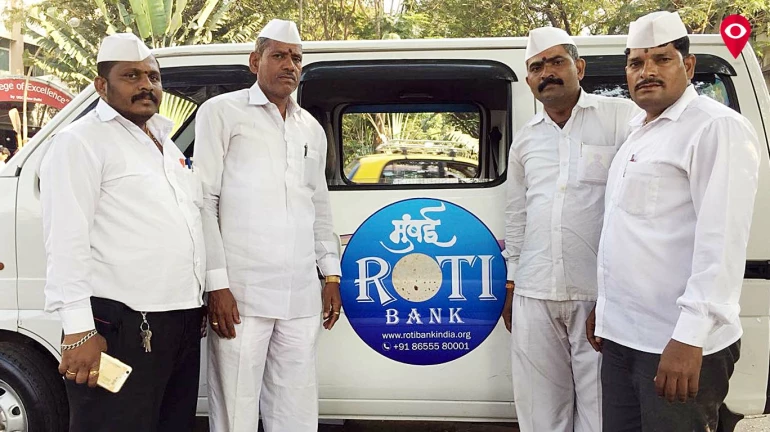
The Roti Bank is neither a company nor a relief agency. It is a people's mission, originated from a simple idea that no one should sleep hungry in the city of excess. Dabbawalas, integral to the city's rhythm, witnessed the contrast between untouched food going to waste and millions eating one meal a day. Rather than letting it slip, they chose to intervene.
Initially an informal arrangement, the Roti Bank has now grown into a movement that collects leftover food from homes, parties, canteens, and events, redistributing it to the hungry across Mumbai. From construction sites and slum pockets to orphanages and railway stations, their reach spans some of the most forsaken corners of the city. Each meal served by them is more than food on the plate; it is a statement: you are seen; you have not been forgotten.
They do not get their groceries through funding, nor do they really desire the fame. It is more empathy and old-school coordination that drive them. Food collection and distribution parallel an equally impeccable arrangement, just like their tiffin system. Volunteers, mostly dabbawalas themselves or locals inspired by the cause, pack, transport, and deliver food with minimal waste and maximum impact. In a fast-moving city, the Roti Bank reminds everyone to pause and care.
What is further remarkable is that it is run by far poorer people. The dabbawalas live the simplest of lives while navigating overcrowded trains and cycling along to make their living. But they share their time, energy, and resources with those in need. This is not charity; it is shared humanity.
Their work reflects the soul of the city of Mumbai, often romanticized for its spirit. While policies and schemes often get stuck in the bureaucracy, grassroots efforts like Roti Bank show that it is those who have faced the struggles that effect real change. It is compassion, not just on paper.
As India continues to find itself in a quandary about hunger and wastage of food on a mammoth-scale, the dabbawalas yet again provide a sustainable and scalable model. It is one based on trust, on human connection, on an intimate acquaintance with the streets they traverse every day. Roti Bank doesn't need fancy branding campaigns or ridiculous PR stunts. It lives and breathes because it fills stomachs as well as hearts.
In other words, the dabbawalas of Mumbai have shown that a true act of service does not lie in convenience. Once again, in a world where convenience rules over conscience, it has shown that a sincere act of service is never tied to elaborate arrangements; it rests solely on the heart that beats. One roti at a time, they are not just feeding the hungry; they are feeding the soul of a city that knows how to care.


Comments